
The DHSC Project was recently represented at the NSF Workshop on the Submerged Paleolandscape Archeology of North America, held at the Smithsonian Natural History Museum, Washington DC. DHSC PI, Professor Geoff Bailey spoke about the importance of integrated approaches to submerged landscapes and the DHSC project’s current research efforts in Europe and Australia.
The DHSC team is delighted to see increased interest in this space internationally and especially glad to see inclusion of Indigenous representatives at the NSF workshop.

Professors James Dixon and Loren Davis organised the workshop highlighting the importance of submerged landscape archaeology to North American and World Archaeology.
Part 1. Global Significance and Progress in the European Union Geoffrey N. Bailey, Flinders University, AUS and the University of York, UK. International Significance of Submerged Landscape Archeology
Vincent Gaffney, University of Bradford, UK. Europe’s Lost Frontiers, the Chichley Conference and Report
Martin Segschneider, Archaeological State Office Schleswig-Holstein, Germany.
Submerged Prehistoric Archaeology and Landscapes of the Continental Shelf
(SPLASHCOS)
Part 2. Submerged Landscapes Archaeology in a National Context
Loren G. Davis, Oregon State University, USA.
Significance of Submerged Landscape Archeology in North America
William Brown. Bureau of Ocean Energy Management, US Department of the Interior. Overview: Federal Agency Regulatory
Responsibilities, Programs, Oversight re: Cultural and Paleontological Resources
on the US Continental Shelves
Douglas Harris, Narragansett Deputy Tribal Preservation Officer. Heritage and Cultural Values of submerged cultural resources.
Part 3. Modeling and Survey Methods: State of the Art
Kelly Monteleone, University of Calgary, Canada. Paleolandscape Modeling.
Jillian Maloney, San Diego State University, USA. Geophysical Survey: Site Survey, Detection, and Sampling
Part 4. Preliminary Working Groups
1) Rationale and significance of submerged paleolandscape archeology
2) Forging interagency, tribal, academic, and private partnerships
3) Defining needs, identifying funding, and logistic resources
4) Scientific, heritage, and resource management – a SPLASHCOS for America?
5) Cultural, field, and laboratory research protocols
6) Developing new methods and technology

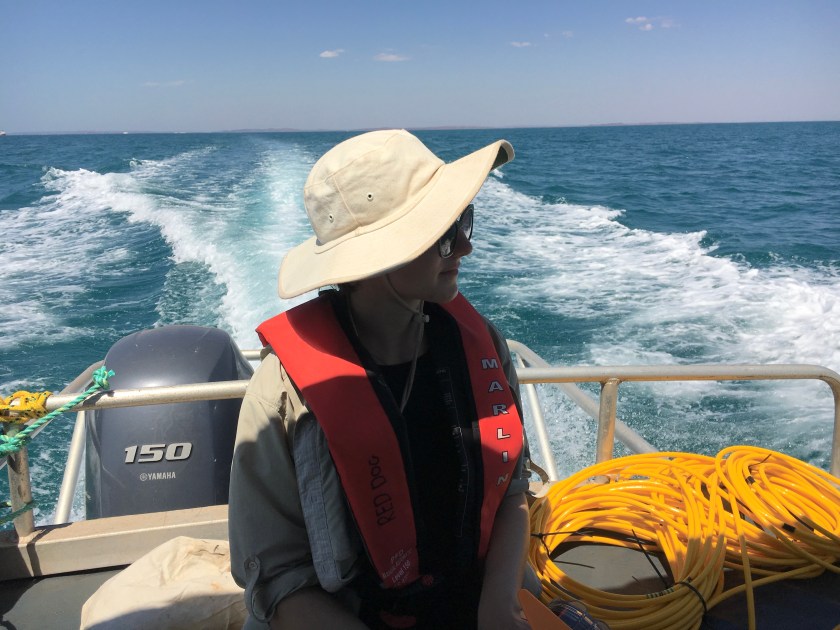 In May/June and again in September/October of last year, I assisted with a series of marine geophysical surveys conducted by the DHSC team in the Dampier Archipelago. Along with other members of the project team, I spent several weeks conducting surveys with a sidescan sonar to better understand the features at the bottom of the ocean around the Dampier Archipelago. The sidescan sonar provides high resolution imagery of the sea floor, allowing the team to analyse the seabed textures and associated features as we refine our survey strategy to analyse submerged landscapes. We’re now working through the data to search for areas which might be conducive to the preservation of archaeological material, and other noteworthy features on the seabed.
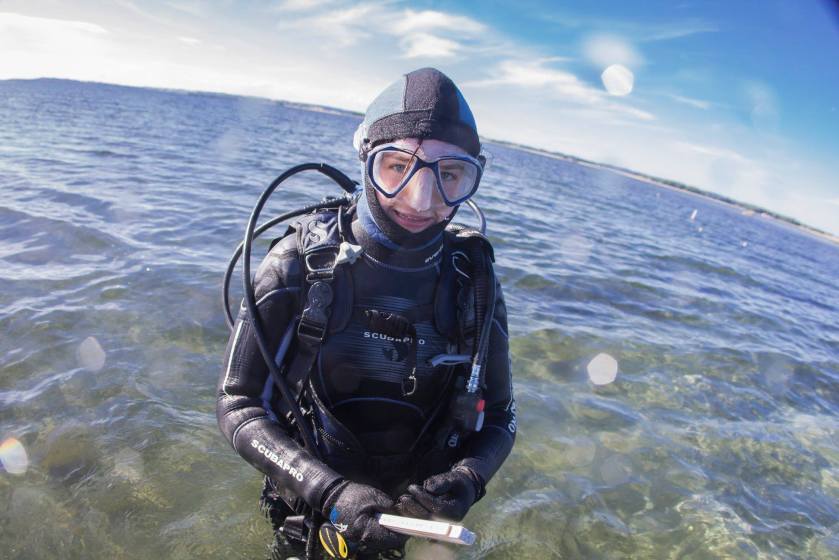 Also in 2018, I joined the DHSC team in Hjarnø, Denmark, where I assisted Francis Stankiewicz and Paul Baggaley in conducting sidescan sonar and sub-bottom profiler surveying. The data from these surveys will be analysed alongside marine sediment cores, and this combination of marine geophysics and coring provides information about how sediments developed over time, and allows us to reconstruct the past (now submerged) landscape. I was also able to join the underwater team and assist in the excavation of a submerged Mesolithic settlement. This field season marked an important milestone for me: my first dives on a submerged prehistoric site. The bulk of my undergraduate training was in terrestrial archaeology, so I learned to dive specifically to transfer my archaeological abilities to underwater prehistory. The cultural material obtained from these sites is remarkably preserved, and the knowledge to be gained from the analysis of submerged sites is critical in furthering our understanding of human interactions with the marine and coastal environment.
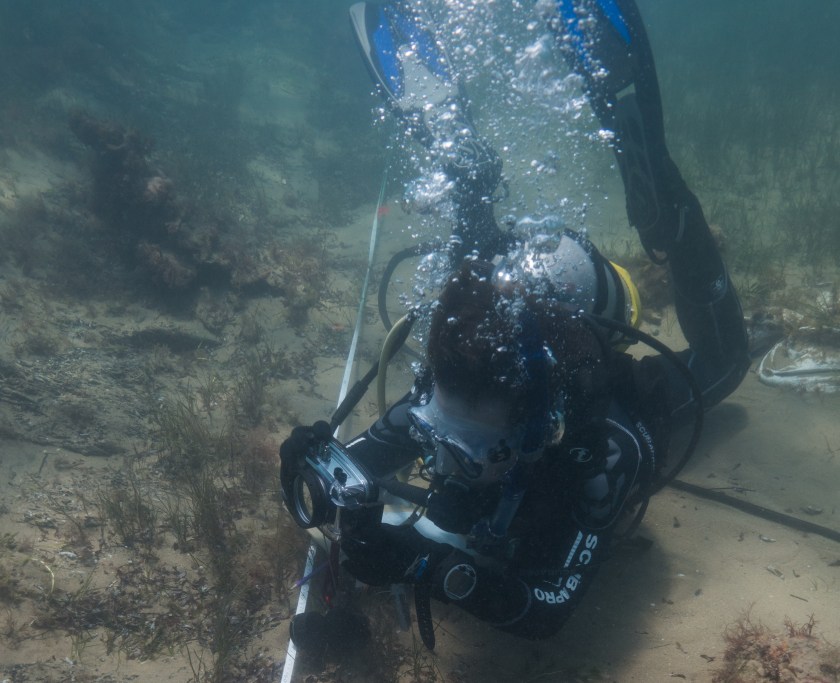 Last July, I travelled to Israel, where I joined a team of researchers on the Bronze and Iron Age site of Tel Dor to undertake further training in underwater archaeological methods. The Near East has an extraordinary amount of archaeological material in both the terrestrial and underwater environment, and the team at Dor aims to integrate the data from its terrestrial and underwater excavations for a rounded view of the maritime history of Dor. We also held a 2019 joint field school between Flinders University and the University of Haifa as part of the UNESCO UNITWIN Network for Underwater Archaeology.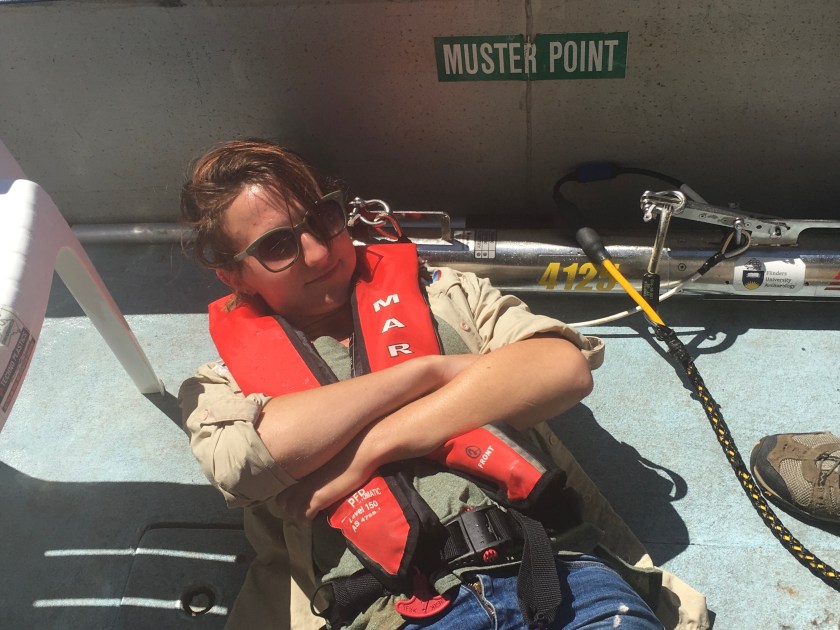
 The second half of 2018 was a very busy time for the DHSC Project. Our blog couldn’t keep up with the various fieldwork, publication and future preparation that our project team was busily undertaking. However we will be rectifying this soon — stay tuned for more posts and updates on the Deep History of Sea Country Project.
 Deep History of Sea Country